It usually starts with something small.
A slightly musty smell when you pull back the covers at night, or that vague heaviness in the air when you walk into your bedroom after a long day. You open the window for ten minutes, spray a bit of perfume on the sheets, maybe change the pillowcase. It feels better… for a day. Then the same stale atmosphere creeps back in, like an invisible guest who never quite leaves.
One evening, a reader told me she slid a humble bowl of baking soda under her bed “just to try.”
She didn’t expect anything. No miracle. No life-changing hack. Yet, a few nights later, she realized she was sleeping more deeply, waking up less groggy, with the room smelling cleaner even in the morning.
A simple white powder, hidden where no one sees it, quietly changing the way a room feels.
The question is: what actually happens down there?
Why a hidden bowl of baking soda can quietly transform your bedroom
The area under the bed is a strange territory.
We rarely look at it, we don’t talk about it, we push boxes and bags there “for later” and then forget them for years. Dust settles, humidity stagnates, odors build up layer by layer. The air you breathe at pillow level is fed, in part, by that dark, forgotten world under the mattress.
We’ve all been there, that moment when you turn your mattress or move the bed a few centimeters and discover a mini-ecosystem of dust bunnies, lost socks and who-knows-what.
Leaving that space closed off and stale encourages a slow cocktail of smells: sweat from the mattress, humidity from the floor, pet dander, sometimes a faint trace of mold if the room is on the cold side. You don’t always notice a strong odor, but your body feels it: heavier breathing, slightly irritated throat, a vague pressure behind the eyes.
This is exactly where a simple bowl of baking soda starts to act.
Baking soda, or sodium bicarbonate, doesn’t perfume the air, it absorbs and neutralizes certain odor molecules. That bowl works a bit like a silent sponge, capturing volatile compounds that usually float around freely in the confined air under your bed. This cleaner micro-atmosphere then mixes with the rest of the room, which can subtly ease breathing at night, reduce that “stuffy bedroom” effect and, for some people, make falling asleep feel surprisingly easier.
How to place baking soda under your bed for real results
The gesture is almost ridiculously simple.
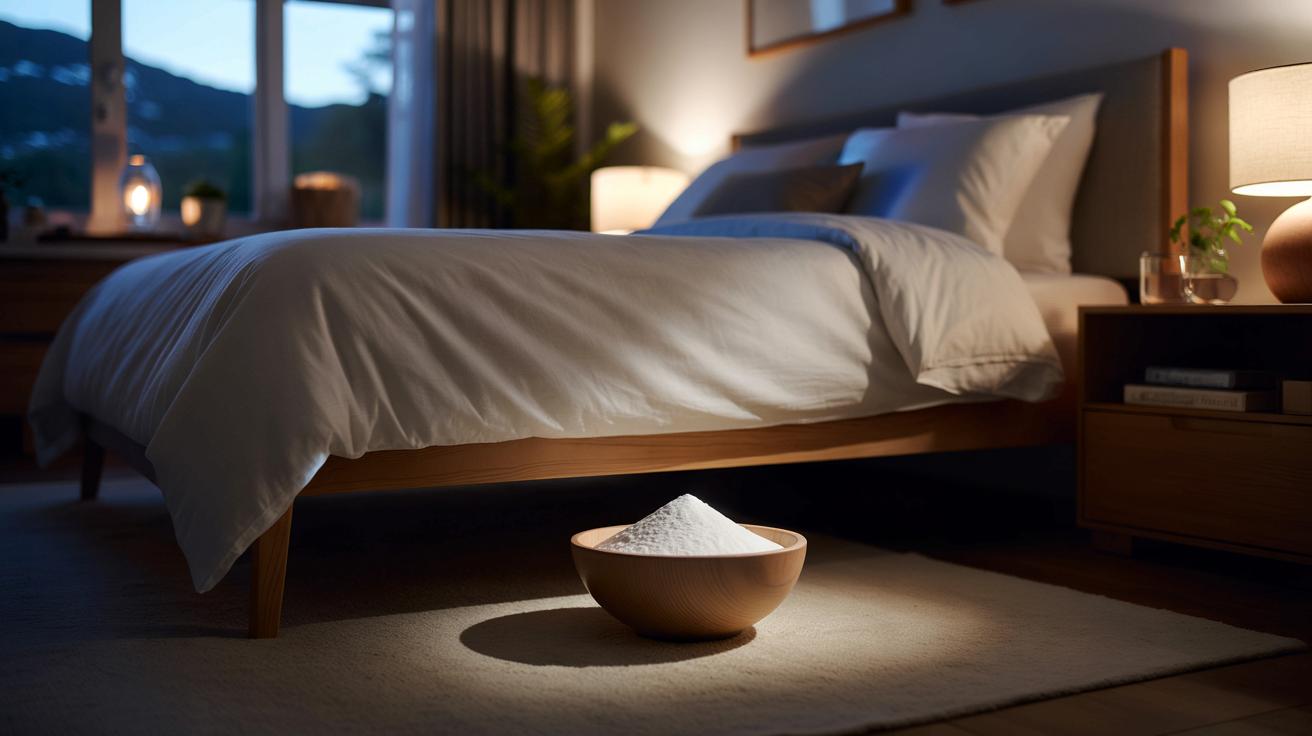
Take a small bowl, a ramekin or even a wide cup. Pour in 4 to 6 tablespoons of baking soda, enough to cover the bottom with a generous layer. No water, no oil, nothing else. Just the powder. Slide the bowl under the bed, ideally near the center, where air circulation is poorest.
If your bed is low, place two smaller containers, one on each side where there’s slightly more space. Leave them there quietly. After about 3–4 weeks, throw the used baking soda into the trash and start again with a fresh batch. That’s the whole “ritual.”
Let’s be honest: nobody really does this every single day. Once a month, or even every two months, already creates a noticeable difference in how “clean” the room feels.
The trap many people fall into is expecting a perfume effect.
They put a bowl down, sniff the air like they’re testing a new candle and, disappointed by the lack of strong scent, decide it doesn’t work. The benefit happens on another level: fewer lingering odors, less heaviness, more neutrality. *It’s a background change, not a firework.* Another common mistake: placing the bowl in a damp spot where leaks or condensation collect. Baking soda absorbs moisture as well, so if the room has genuine humidity problems, the powder can cake quickly and lose efficiency.
Some readers, a bit skeptical at first, ended up becoming loyal to this tiny ritual.
One of them told me:
➡️ Meteorologists warn early February signals suggest the Arctic is entering uncharted territory
➡️ No vinegar and no baking soda: pour half a glass of this and the drain practically cleans itself
➡️ Neither swimming nor Pilates: the best activity for people with knee pain
➡️ This haircut works well for women over 50 who want movement at the ends
“I started during a heatwave because my bedroom smelled like closed gym locker by the end of the day. After two weeks with baking soda under the bed, the smell was just… gone. Not replaced, not masked. Gone.”
To help you experiment more calmly, here’s a short checklist:
- Use pure, food-grade baking soda, not a scented cleaning mix.
- Keep the bowl out of reach of small children and curious pets.
- Combine it with basic habits: airing the room, washing sheets regularly.
- Test for one full month before judging the result.
- Replace the powder the moment it starts to clump or gray slightly.
Beyond odor control: what this small habit changes in your relationship to sleep
Placing a bowl of baking soda under your bed doesn’t magically cure insomnia, and it won’t solve real medical breathing issues.
What it can do, though, is help create a bedroom that feels lighter, cleaner and less suffocating. When you enter a room that doesn’t attack your nose, that doesn’t feel “thick” after being closed all day, your body relaxes a little faster.
Sleep isn’t just about the number of hours on your alarm clock.
It’s the whole environment: air quality, noise, temperature, level of clutter, small rituals before bed. **This tiny, almost invisible action under the bed sends a message to your brain**: this place is taken care of, this is a safe, clean corner of the world for you to rest. That’s not magic, that’s psychology. The impact is subtle, but many people describe a more “fresh” awakening, fewer headaches upon rising, and the pleasant feeling of slipping into a room that doesn’t smell like the day before.
There’s also the symbolic side.
Taking five minutes to slide a bowl of baking soda into the most forgotten place in the bedroom is like turning on a small light in a dark closet. You reclaim a space you usually ignore. Some people end up cleaning under the bed more often, moving forgotten boxes, washing the bed base, checking for mold or dust nests. **A simple bowl can quietly trigger a chain reaction in how you care for your home**. That’s probably its most surprising benefit: a discreet, almost invisible invitation to breathe better, sleep better, and live a bit more lightly in your own space.
| Key point | Detail | Value for the reader |
|---|---|---|
| Neutralizes odors under the bed | Baking soda captures volatile compounds instead of masking them with perfume | Cleaner, less stuffy bedroom air and more pleasant sleep environment |
| Simple, low-cost routine | One bowl, a few spoons of baking soda, replaced every 3–4 weeks | Easy habit to maintain, accessible to all budgets and lifestyles |
| Encourages better sleep hygiene | This little gesture often leads to more cleaning and care around the bed | Improved comfort, fresher mornings, deeper sense of well-being at home |
FAQ:
- Can I use baking powder instead of baking soda under the bed?Baking powder isn’t ideal. It contains other ingredients and doesn’t absorb odors as effectively as pure baking soda. Stick to food-grade bicarbonate of soda.
- Is it dangerous for pets or children?In small amounts, baking soda isn’t highly toxic, but ingestion can cause stomach upset. Place the bowl where pets and kids can’t reach it, or use a perforated container with a lid.
- How often should I change the baking soda?On average, every 3–4 weeks works well. If your room is very humid or you notice the powder clumping or darkening, change it sooner.
- Will this remove mold under the bed?Baking soda can help with odors related to mild dampness, but it doesn’t fix structural moisture or active mold. If you suspect mold, you need proper cleaning, ventilation and sometimes professional help.
- Can I add essential oils to the bowl?You can, but essential oils mostly perfume the air instead of improving absorption. If you enjoy a light scent, add a drop or two on top, without soaking the entire surface.